Bleach, Rinse, Repeat: What Happens When Your Favorite Doujin Goes to Barnes & Noble
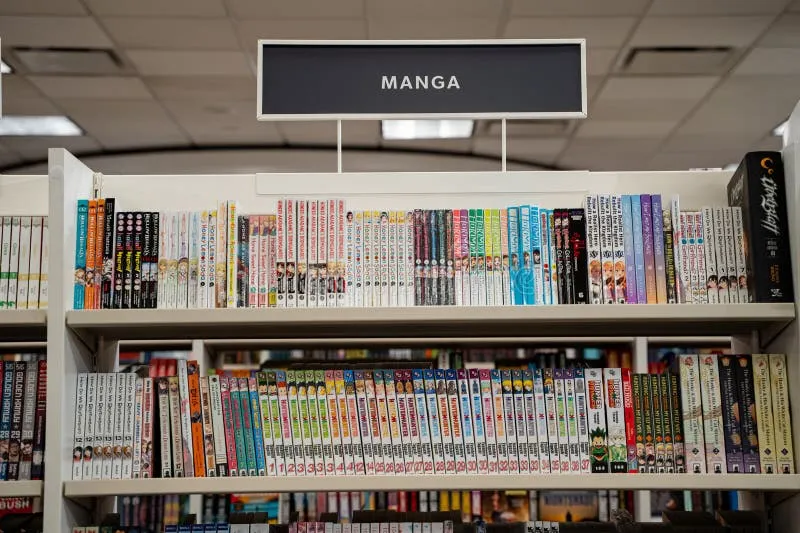
Photo: manga volumes bookstore shelf display, via thumbs.dreamstime.com
Walk into any Barnes & Noble in America and head to the manga section. It's bigger than it used to be — way bigger. Manga is a multi-billion dollar stateside business now, and retailers who once wouldn't touch the stuff are happily shelving it next to the YA novels. But here's the thing nobody puts on the shelf talker: some of what you're buying used to be a lot dirtier.
The Great Content Scrub
Over the past few years, a quiet pipeline has developed. Japanese publishers — and increasingly, Western licensees — have been taking properties that started life as explicit doujin work or adult serializations and 'cleaning them up' for mainstream retail. Scenes get redrawn. Panels get cropped. Entire chapters vanish. The book arrives at your local store looking like any other volume, wearing its clean edition like a borrowed suit.
Sometimes the changes are cosmetic. The infamous white fog of Japanese broadcast censorship becomes a permanent fixture in the print edition, because that's what flies at retail. Other times the edits are surgical: a love scene reworked into a fade-to-black, a character's whole storyline softened so the book can carry a lower age rating and reach more shelf space.
Follow the Money (It's in the Bookstore)
None of this happens because editors woke up squeamish. It happens because of distribution math.
An 'Mature 18+' rating shrinks your retail footprint dramatically. Major chains, big-box stores like Target and Walmart, school book fair adjacent channels — all of that closes off the moment content gets explicit. A cleaned-up edition can triple or quadruple a title's potential retail footprint overnight. For a publisher staring at licensing fees, translation costs, and print runs, that math is brutal and obvious.
There's also the Amazon problem. The biggest bookseller in America has its own content standards, and titles that trip its filters can get delisted, buried, or shipped 'damaged' with covers bent by warehouse staff who'd rather not handle them. Cleaning up a book is, in part, an insurance policy against the algorithm.
What Gets Lost in the Wash
Here's where it gets interesting for the people who actually care about this stuff — which is to say, us.
Adult manga isn't explicit by accident. The best of it uses intimacy as characterization. A scene that plays as pure fanservice in one artist's hands is, in another's, the moment a character stops performing and starts being honest. When you sand those moments down for retail, you don't just lose the spice. You lose information. Relationships read differently. Character arcs land softer. The Barnes & Noble edition is frequently a genuinely different story wearing the same cover art.
And fans have noticed. A whole import culture has sprung up around hunting down the Japanese originals — the tankobon with the pages intact, or the original doujin release before the commercial edition smoothed it over. Proxy services, JPBookseller deep dives, Kanoko-style price tracking: American collectors are paying two, three, sometimes five times retail for editions that are, on paper, identical books.
Except they're not identical. That's the whole point.
Is This Censorship or Just Business?
I'll be honest — I go back and forth on this one.
The purist take is simple: altering an artist's work without prominent disclosure is a raw deal for readers, and it erases work that was legal in its home country. There's real merit to that. Transparency labeling — a clear 'content differs from original edition' note — costs a publisher nothing and respects the buyer.
The pragmatist counter: nobody's confiscating the original. Japanese editions still exist. The cleaned-up version funds more translations, more artists getting paid, more titles reaching American readers who'd never touch an import. Mainstream availability built the manga boom that makes niche adult titles viable in the first place. A sanitized edition of a doujin classic sitting in a suburban bookstore is, weirdly, a victory for the medium.
Both things are true. The edit is a compromise, and the compromise is often what makes the book exist in English at all.
What Collectors Should Actually Do
If you care about getting the real thing, a few practical notes:
- Check the rating before you buy. A 'Teen' rating on a title you remember being very much not teen-friendly is your first red flag.
- Read the fine print on the copyright page. Legit publishers usually disclose content revisions, even if the disclosure is doing some heavy lifting with euphemisms.
- Compare page counts. A Japanese tankobon running 30+ pages longer than the English edition is telling you something.
- Budget for imports if it matters to you. Proxy shopping has never been easier, and for cornerstone titles in your collection, the premium is the price of integrity.
The petition economy — fans lobbying publishers for uncut releases, crowdfunding unabridged reprints, making noise on social media — genuinely works. Several publishers have reversed course on edits after enough fan pressure. Money talks, but organized money screams.
The shelf at your local bookstore isn't the whole story anymore. It's the edited highlight reel. The full version is still out there — it just takes a little more digging, and maybe a little more cash, to hold it in your hands.


