Route Locked: The Visual Novel Mechanics Hollywood Wish It Understood
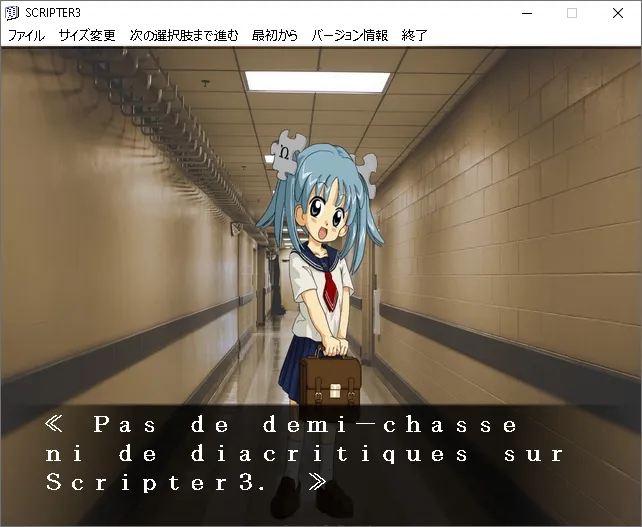
Photo: 31NOVA, CC BY-SA 4.0, via Wikimedia Commons
Somewhere along the way, a generation of American fans learned to experience romance through a flowchart. You met a girl, you made choices, you got locked into her route, and if you played your cards right, you reached the good ending. If you fumbled, you got the bad ending, the void terminal, the quiet horror of a save file you'd have to rewind. That structure — invented by Japanese visual novels and perfected across decades of eroge — didn't stay in the games. It rewired our expectations for everything downstream, including the animated adaptations we stream at 1 a.m.
And the industry knows it. Look at what gets adapted, season after season: multi-route visual novels, chosen not despite their branching structure but because of it. The route map is the brand. Fans don't ask 'is it good?' They ask 'whose route did they adapt?'
The Save File Problem
Here's the structural headache every adaptation faces: a visual novel is a tree, and an anime is a line. In the game, the player is the protagonist, making choices, committing to one girl's story while the others exist in parallel possibility. In the anime, there's no player. The director has to pick a path and commit — or worse, try to keep every path open at once.
The results split into three recognizable strategies. The first is the commitment play: pick one heroine, adapt her route, and let the fandom of every other heroine burn the studio's comment section to the ground. The second is the harem blur, where the adaptation tries to keep all routes lukewarm simultaneously and satisfies no one, because the entire appeal of the source was exclusivity. The third — the rarest and most chaotic — is the omnibus format, where each arc commits fully to a different route. It's the most faithful to the source and the most jarring to watch, because the protagonist's personality quietly reshapes itself every few episodes to fit whoever he's romancing now.
The Most Convoluted Transfers Ever Attempted
A short, loving tour of the genre's most ambitious translation jobs:
The multi-route omnibus. Adaptations that split their runtime into separate, self-contained route arcs — structurally honest, emotionally whiplash-inducing. Watching them in order feels like dating four people in alternating weeks and being expected to cry at each breakup.
The true-route tease. Titles that spend most of their runtime on the ensemble before revealing, in the final act, that there was a hidden 'real' ending all along. This works in a game because the player earned it through multiple playthroughs. On screen, it reads as the anime admitting the first eight episodes were a prologue.
The bad-ending anthology. A few brave adaptations have dramatized the failure states — the routes where everything falls apart. As horror, it's genuinely effective. As fan service, it's a betrayal that gets quoted in anger for decades.
The sequel-bait split. Adaptations that cover the common route and stop, banking on a second season to reach any route at all. Some of these have been waiting for that second season longer than some fans have been alive.
Does the True Route Survive?
The philosophical question underneath all of this: in a branching story, which ending is 'real'? Visual novels answer with the true route — the canonical thread the writer considers the actual story, with everything else a detour. But here's the thing fans rarely admit: the true route only means something because the other routes existed. The good ending lands because you've seen the bad ones. You chose it.
An anime can't give you that choice, which means it can't give you that weight. What it can give you is the writer's answer, delivered without the struggle that made the answer matter. That's why the most beloved route adaptations tend to be the ones that stop pretending to be the game and start being their own thing — same characters, same world, one straight line, drawn with conviction.
The route map trained us to expect possibility, and animation can only ever show us one possibility at a time. Maybe that's the real reason fans keep buying the games after watching the anime. The screen tells you a story. The flowchart lets you live one. Both have their hour — but only one of them lets you reload when it all goes wrong.