Declined at Checkout: The Quiet Financial Gatekeepers Deciding What Adult Anime You Get to Watch
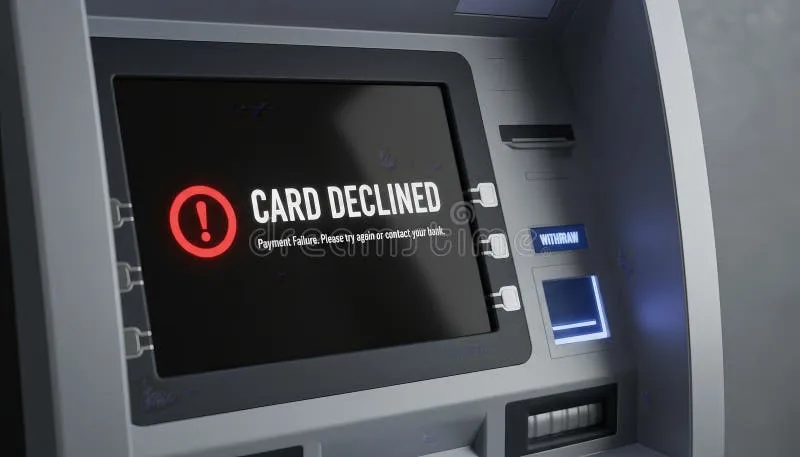
Photo: credit card declined payment error on laptop screen dark room, via thumbs.dreamstime.com
You found the studio. The trailer slapped. You pulled out your card, typed in the numbers, and got the most American sentence in adult entertainment: "Transaction declined." No explanation. No appeal process. Just a wall.
Here's the thing most viewers never learn — that decline had nothing to do with Congress, nothing to do with Japanese law, and everything to do with a handful of private companies you've never heard of.
There Is No Law Against Your Waifu
Let's clear up the biggest misconception first. Buying adult anime with a credit card is legal in the United States. There's no federal statute blocking you from subscribing to a legitimate adult animation platform. So why does it feel illegal?
Because the actual gatekeeping happens upstream of the law. Visa, Mastercard, and Discover don't process transactions themselves — they delegate to member banks, and those banks lean on acquiring banks and payment processors to manage risk. Adult content is classified as a "high-risk" merchant category, right up there with gambling and pharmaceuticals. High-risk means higher fees, tighter scrutiny, and — crucially — a much shorter leash.
When a processor gets nervous, it doesn't lobby for new legislation. It just updates its acceptable-use policy. One paragraph of corporate boilerplate, and suddenly an entire genre of art becomes functionally unpurchasable for millions of people.
The Secret Life of a Billing Descriptor
If you've ever successfully bought adult anime, you've probably noticed your statement didn't say anything explicit. That's not a courtesy — it's survival architecture.
Studios and platforms in the adult space routinely bill through parent companies with bland names: a "media services LLC," a "digital entertainment group," sometimes just initials. This practice, often called discreet billing, exists for two reasons. First, privacy — plenty of customers share statements with partners, roommates, or accountants. Second, and more cynically, it keeps the transaction from tripping risk filters.
But here's the catch: the descriptor is just the label. The underlying merchant account is still coded as adult. If the processor decides to dump its high-risk portfolio, the bland descriptor won't save anyone. Platforms have woken up to frozen payouts and terminated merchant accounts with zero warning — the digital equivalent of a landlord changing the locks overnight.
Collateral Damage: The Studios That Never Made It
This is where it stops being your problem and starts being a culture problem. Financial censorship doesn't just block purchases — it determines what gets made.
Consider the incentives. If a studio knows that certain content categories make processors skittish, it will quietly sand the edges off its catalog. Extreme genres, niche fetishes, anything that raises a risk analyst's eyebrow — all of it becomes a liability before a single frame is drawn. The result is a catalog curated not by artists or by audience demand, but by the risk tolerance of a payments company in the Midwest.
Meanwhile, studios with deeper pockets survive by diversifying: separate corporate entities, mainstream sister brands, offshore billing arrangements. Small doujin circles and indie Western creators get no such lifeline. The barrier to entry isn't talent anymore — it's banking.
Compare that to the mainstream anime industry, where a streaming giant's credit card deal is a formality. The gap between what's easy to buy and what's hard to buy is quietly redrawing the map of adult animation.
How to Actually Pay for Your Degenerate Habits
Alright, practical section. If your card keeps getting declined, you have options:
- Cryptocurrency. Many adult platforms now accept Bitcoin, Ethereum, or stablecoins. No bank in the middle, no descriptor on a statement. The tradeoff is volatility and a learning curve — but if you're already buying figures from proxy services, you're halfway there.
- Prepaid and virtual cards. Some virtual card services (Privacy.com being the best-known) let you generate single-use card numbers. Fair warning: many of these services explicitly prohibit adult transactions too, so read the terms before your card dies mid-subscription.
- Direct wallet payments. Platforms like Fanbox and Fantia, which host tons of adult doujin creators, support payment methods that route through Japanese processors with different risk appetites than US banks.
- Gift cards and store credit. Some marketplaces let you load a balance with a retail gift card, keeping your bank completely out of the loop.
One universal tip: if a charge does go through, screenshot the descriptor. Future-you, staring at a cryptic statement during tax season, will be grateful.
The Argument Nobody's Having
Here's the uncomfortable takeaway. We spend a lot of energy debating censorship as a legal question — court cases, legislation, free speech absolutism. But the most effective censorship of adult anime in America isn't happening in courtrooms. It's happening in risk departments, in acceptable-use documents, in a merchant category code.
A bank can't make content illegal. It can just make content inconvenient. And inconvenience, at scale, is indistinguishable from a ban.
So the next time your card declines on a Friday night, remember: you're not just hitting a payment error. You're seeing the invisible hand — and it's deciding which waifus get funded next.